


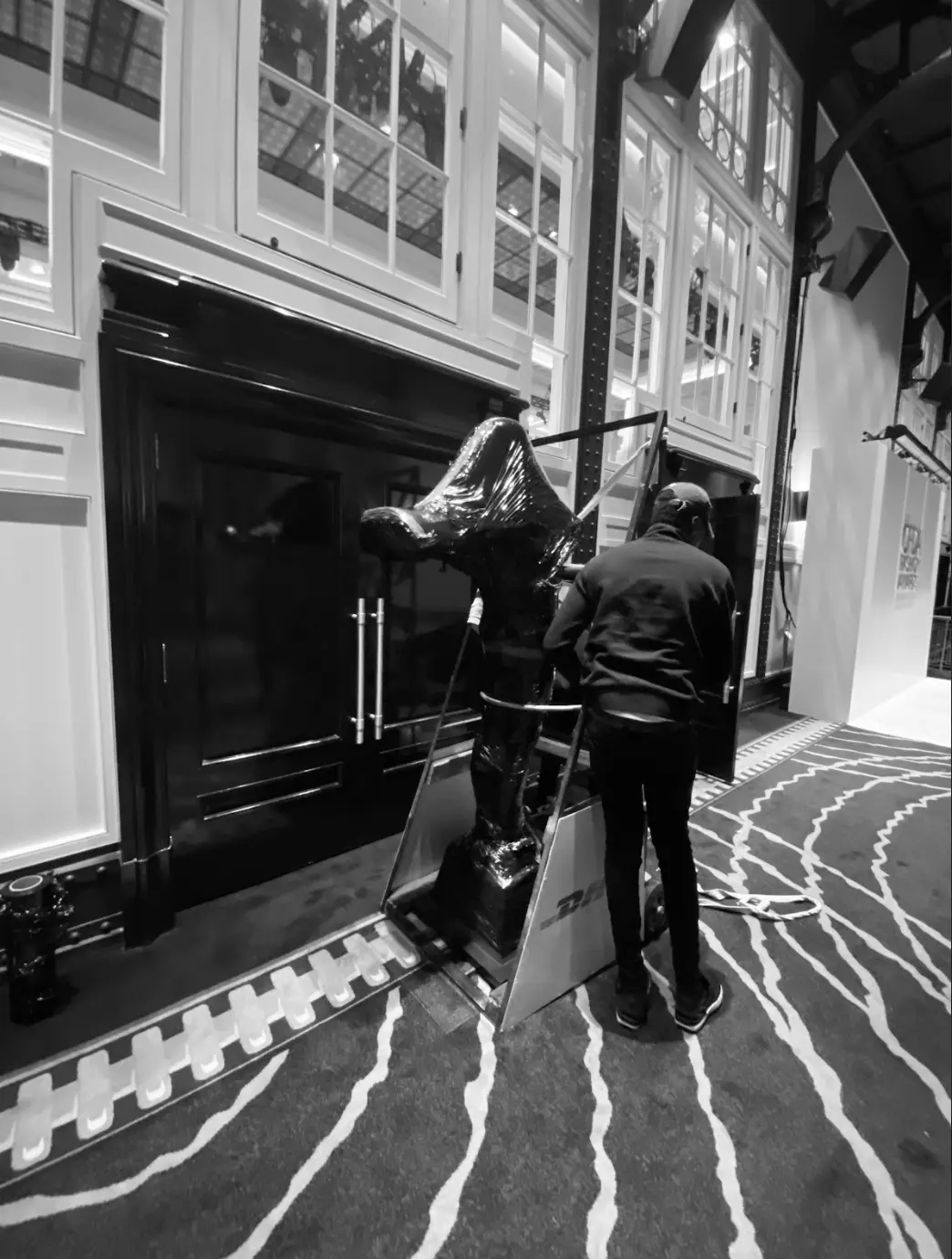
Why CITES Permits Matter in Art Shipping
The global art and antiques trade often involves the transport of delicate and valuable materials, including sculptures made of ivory or protected hardwoods like rosewood and ebony. However, transporting such items across international borders is subject to rigorous compliance under the Convention on International Trade in Endangered Species of Wild Fauna and Flora (CITES).
Whether you’re an art collector, dealer, auction house, or museum, understanding how to navigate the CITES permit process is critical. Non-compliance can result in heavy fines, seizures, and reputational damage.
This guide offers a definitive, step-by-step breakdown of how to obtain and use CITES permits when shipping ivory or wood sculptures internationally, and why Union Fine Art Services is your ideal logistics partner for such sensitive cargo.
What Is CITES and Why Does It Matter for Ivory or Wood Sculptures?
CITES is an international agreement between governments, designed to ensure that international trade in specimens of wild animals and plants does not threaten their survival. As of today, CITES has over 180 member countries.
Materials Covered by CITES:
- Ivory (Elephant tusks, mammoth ivory, etc.)
- Hardwoods (e.g., rosewood, mahogany, ebony, sandalwood)
- Animal products (e.g., bone, horn, coral)
- Other endangered species-derived items
CITES classifies species into three appendices:
- Appendix I – Threatened with extinction; trade is highly restricted.
- Appendix II – Not necessarily threatened, but trade is controlled.
- Appendix III – Protected in at least one country.
Even antique items made decades or centuries ago may require a CITES permit if the materials are listed.
Do I Need a CITES Permit for My Sculpture?
You will need a CITES permit if:
- Your sculpture contains elephant ivory (regardless of age or provenance).
- It contains protected wood species such as Dalbergia (rosewood).
- You are exporting or importing the item across international borders.
- You plan to sell or exhibit the sculpture in another country.
You may be exempt if:
- The item is a personal possession not for sale, and falls under the personal effects exemption.
- It qualifies as a pre-Convention item (e.g., made before the species was listed).
However, even with exemptions, documentation is often still required.
🔍 Important: Different countries apply CITES regulations differently. Always check with both export and import authorities before shipping.
Step-by-Step Process for Obtaining a CITES Permit
1. Identify the Material and Its CITES Status
Before applying for a permit, you must determine:
- The species used in your sculpture.
- Its scientific name (e.g., Loxodonta africana for African Elephant).
- Whether the species is listed in Appendix I, II, or III.
Resources:
- CITES Species Database
- Certificate of origin or appraisal from a reputable expert.
2. Verify Provenance and Age
For antique or pre-Convention items:
- Provide evidence of age (dated photographs, invoices, expert evaluations).
- Establish that the item was acquired before the CITES listing date.
In some cases, you’ll need a Pre-Convention Certificate to prove lawful acquisition.
3. Apply for a CITES Permit (Export, Import, or Re-export)
You’ll need to apply through your national CITES Management Authority. Each country has its process.
Required Documents:
- Completed CITES permit application form.
- Proof of legal acquisition (purchase receipt, provenance certificate).
- Species identification and scientific classification.
- Purpose of the transaction (e.g., exhibition, sale, permanent export).
- For commercial trade: Export license or proof of ownership.
4. Pay Permit Fees
Most CITES applications require a processing fee, which varies by country and the complexity of the item. Fees range from $75 to $500+, depending on the issuing authority.
5. Await Review and Approval
Approval time varies:
- Some permits are issued within 2–6 weeks.
- Complex or high-risk applications may take 3–6 months.
Authorities may consult scientific institutions or request additional documentation.
6. Secure the Permit and Use it During Shipping
Once issued, the CITES permit must:
- Travel with the item at all times.
- Be present at customs during both export and import.
- Not to be altered or photocopied (original required in most cases).
Common Scenarios Involving CITES Permits
1. Shipping an Antique Ivory Sculpture from France to the U.S.
- Step 1: Determine the ivory source (e.g., African elephant).
- Step 2: Confirm it’s pre-Convention (before July 1, 1975).
- Step 3: Obtain an export permit from France and an import permit from the U.S. Fish and Wildlife Service (FWS).
- Step 4: Partner with a logistics provider like Union Fine Art Services to handle shipping and customs.
2. Sending a Rosewood Carving to an Art Fair in China
- Rosewood is listed under Appendix II.
- Temporary export and re-import may require:
- A re-export certificate
- Temporary import permit from China
- Confirmation that the item will return within a defined period
- Union Fine Art Services can facilitate the ATA Carnet process, which works in tandem with CITES documentation.
How Long Is a CITES Permit Valid?
- Typically valid for six months from the date of issue.
- One-time use only: A new permit is needed for each transaction or movement.
- In the case of multiple identical items, you may apply for a “Master Permit” with Transaction Sheets.
CITES Permit Challenges and How to Avoid Them
| Challenge | Solution |
| Delays in approval | Start application early (2–3 months in advance) |
| Incomplete documentation | Work with a qualified logistics partner to assemble the required paperwork |
| Seizure at the border | Ensure the original permit is present, accurate, and unexpired |
| Misclassification of materials | Obtain expert species identification |
| Conflicting regulations between countries | Rely on customs-savvy agents like Union Fine Art Services |
Why Choose Union Fine Art Services for CITES-Regulated Art Shipping?
Shipping ivory or wood sculptures internationally isn’t just about logistics—it’s about compliance, conservation, and credibility. This is where Union Fine Art Services excels.
✅ Expertise in CITES Compliance
We’ve handled numerous cross-border shipments involving CITES-listed materials. Our team understands the nuances of documentation, permit coordination, and species classification.
✅ End-to-End Support
From applying for export permits to liaising with customs officers on the receiving end, Union Fine Art Services ensures your artwork reaches its destination without regulatory setbacks.
✅ White-Glove Packing and Handling
Sculptures are fragile and often irreplaceable. We use museum-grade packing materials and techniques tailored to the sensitivities of ivory and wood.
✅ Secure Transit & Climate Control
Our transit partners offer GPS-tracked, climate-controlled vehicles and air freight options, ensuring environmental changes don’t damage sensitive items.
✅ Global Network of Agents
Through trusted international partnerships, we coordinate with in-country customs brokers to streamline CITES clearance in over 70 countries.
FAQs About CITES and Art Shipping
Q1: Can I ship mammoth ivory without a CITES permit?
A: While mammoth ivory is not listed under CITES, some countries (like the U.S. and EU nations) impose independent trade restrictions. You may still need documentation.
Q2: What happens if I ship without a CITES permit?
A: Your item may be confiscated, destroyed, or returned. You may face fines or criminal charges. Most importantly, you may lose the trust of clients, buyers, or institutions.
Q3: Can Union Fine Art Services help me apply for the permit?
A: Yes. While we don’t issue the permits ourselves, we assist clients in:
- Gathering documents
- Submitting accurate applications
- Coordinating with both export and import authorities
Q4: What if I’m unsure whether my sculpture requires a permit?
A: Contact Union Fine Art Services for a free consultation. We’ll evaluate your item’s materials and determine its CITES status with expert assistance.
Conclusion: Get It Right the First Time
Navigating the CITES permit process is essential when shipping sculptures made of ivory or protected wood internationally. One oversight can result in confiscation, legal troubles, or damaged relationships with clients and collectors.
By working with a specialist logistics partner like Union Fine Art Services, you can focus on the art while we handle the compliance, transportation, and documentation every step of the way.
Ready to Ship? Let’s Talk
Visit https://unionfas.com to learn more about how we can manage your CITES-regulated art logistics with precision and peace of mind. Or contact our team directly for a free quote and compliance check.