


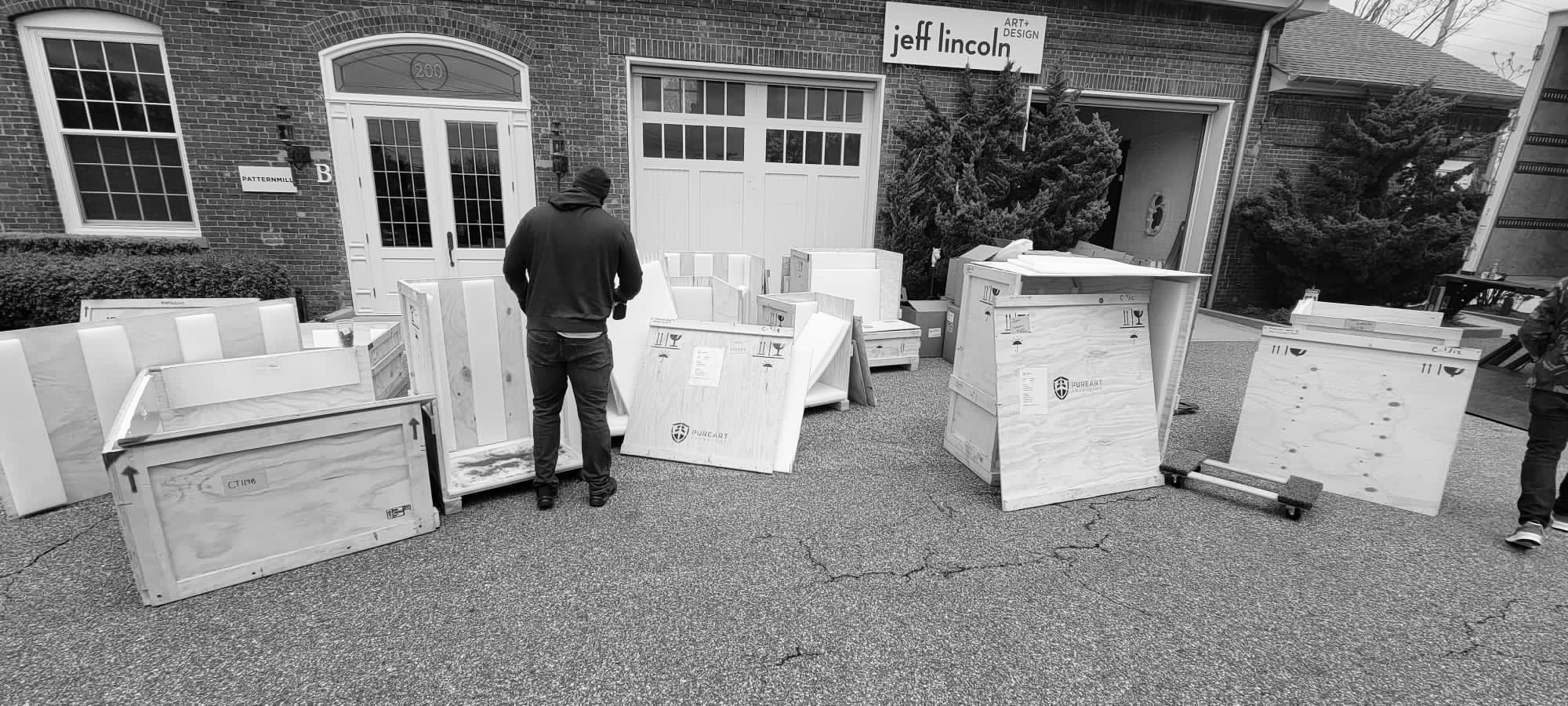
How Do I Calculate Foam Density Requirements for Shock Absorption?
Protecting valuable or fragile artworks during shipping and storage requires precision, particularly in the packaging and crating stages. One of the most important components of proper protective packaging is the foam used inside crates. Calculating the correct foam density for shock absorption is essential to ensure that the artwork arrives in pristine condition, even after handling, transport, or long-term storage.
In this guide, we’ll explore how to calculate foam density requirements, why it matters, and how Union Fine Art Services (https://unionfas.com) provides expert solutions tailored to various types of artwork and media.
Understanding Foam Density and Its Importance
Foam density refers to the weight per unit volume of a foam, typically measured in pounds per cubic foot (PCF) or kilograms per cubic meter (kg/m^3). It is not the same as firmness or compressibility, but it influences those properties significantly. Higher-density foams tend to absorb more energy and provide better shock absorption, but they may be too rigid for very delicate items. Conversely, low-density foams may compress easily and not provide enough protection.
Why foam density matters:
- It determines how much shock or vibration the foam can absorb.
- It impacts the amount of compression under load.
- It affects how well the foam supports and cushions an object over time.
For delicate works of art—whether paintings, sculptures, or multimedia installations—the wrong foam can lead to surface abrasions, frame warping, or even total breakage.
Types of Foam Used in Art Packaging
When packaging artworks, different foam types are selected depending on their density, structure, and chemical composition. Here are the most common types:
- Polyethylene (PE) Foam
- Durable and firm
- High load-bearing capacity
- Ideal for heavy sculptures or framed works
- Polyurethane (PU) Foam
- Softer and more flexible
- Suitable for delicate, lightweight items
- Ethafoam / Stratocell
- Cross-linked PE foams
- Closed-cell and highly shock-absorbent
- Volara Foam
- Fine-celled, flexible, and resistant to chemicals
- Commonly used for surface contact with sensitive media
Union Fine Art Services uses industry-grade foam materials that meet museum standards and are customized for each artwork’s needs.
How to Calculate the Right Foam Density
The calculation of foam density requirements involves evaluating several factors:
1. Weight of the Object (W)
Start by measuring the weight of the artwork in pounds (lbs) or kilograms (kg). This determines the compressive forces the foam must resist.
2. Fragility Rating (G-rating)
Each item has a fragility rating, expressed in terms of the maximum shock (G-force) it can withstand without damage. Common values:
- Very delicate: 15-25 G
- Moderately delicate: 40-50 G
- Robust items: 80-100 G
Delicate oil paintings or glass elements typically require low-G-rating foam packaging.
3. Drop Height (H)
Consider the realistic drop height during handling (typically 30 to 36 inches or about 0.75 to 0.9 meters).
4. Foam Thickness (T)
Thicker foam can absorb more energy. General guidelines:
- Lightweight objects: 2-3 inches
- Medium weight: 3-4 inches
- Heavy or high-risk objects: 4-6 inches
5. Shock Absorption Formula
The required cushion performance can be calculated using:
E = (W x G x H) / T
Where:
- E = Energy absorption needed (impact energy)
- W = Weight of the object
- G = Fragility rating
- H = Drop height
- T = Thickness of foam
Use this output to match foam materials that can absorb E levels of energy without bottoming out.
Example:
- Painting weighs 20 lbs
- Fragility: 30 G
- Drop height: 36 inches
- Foam thickness: 3 inches
E = (20 x 30 x 36) / 3 = 7,200 foot-pounds/inch
Look for a foam that can absorb 7,200 ft-lbs/in and distribute it evenly.
Guidelines for Matching Foam to Media Types
Different art mediums require different foam properties:
Paintings
- Use: Polyurethane foam or soft PE foam with 1.5–2.2 PCF
- Thickness: At least 2″ for lighter frames; 4″ for heavier works
- Extra: Acid-free liners to prevent chemical interaction
Sculptures
- Use: High-density PE foam (2.2–4 PCF) for structural stability
- Thickness: Minimum of 4″
- Extra: Contoured cut-outs for snug fit
Works on Paper or Photography
- Use: Low-density polyurethane or Volara foam (0.9–1.5 PCF)
- Extra: No direct contact; use archival sleeves
Mixed Media / 3D Installations
- Use: Customized foam inserts and multi-layer systems
- Strategy: Combine various densities to address different materials
Union Fine Art Services carefully evaluates each artwork’s physical properties and intended travel route to develop tailored foam packaging solutions.
Crating Design Considerations for Shock Absorption
Foam density is only one part of the protective equation. Crate design also plays a key role in mitigating impact.
Internal Suspension
Using floating panels or shock-mount systems can reduce vibrations and sudden jolts.
Double-Wall Crates
Adds structural resilience and additional space for protective layers.
Vibration-Dampening Materials
Cork, Sorbothane, or rubber gaskets can be used in conjunction with foam.
Moisture Control
Foams should be water-resistant or used with desiccants and vapor barriers to prevent mold and degradation.
How Union Fine Art Services Delivers Expert Foam Solutions
At Union Fine Art Services, we specialize in museum-quality packaging solutions for fine art, antiques, and valuable collectibles. Our process involves:
- On-Site Assessment: We assess the object’s weight, fragility, and dimensions.
- Custom Foam Fabrication: We cut foam precisely using CNC machines and select the right density.
- Crate Engineering: Our crates are engineered to work synergistically with foam for complete shock isolation.
- Installation Support: We provide professional handling, packing, and installation services.
Common Mistakes to Avoid in Foam Selection
- Using foam that’s too soft: May compress and allow the artwork to shift or touch crate surfaces.
- Overstuffing foam: Compressing foam before placing the object eliminates its ability to absorb energy.
- Neglecting multi-density layering: Using only one foam type may not provide balanced protection.
- Skipping field testing: Always test crate and foam performance with dummy weights or vibration simulations.
Final Thoughts: The Science of Art Safety
Correctly calculating and selecting foam density for shock absorption isn’t just a technical requirement—it’s a form of preservation. The wrong material choice could mean cracked glass, torn canvas, or irreversible damage to priceless works.
When you partner with a specialized provider like Union Fine Art Services, you gain access to decades of technical packaging knowledge and museum-level standards. Whether you’re moving an entire exhibition or a single masterpiece, our foam and crate systems are engineered to protect what matters most.
Get in touch with Union Fine Art Services today to learn how our custom foam and packaging solutions can protect your valuable artworks, no matter the destination.