


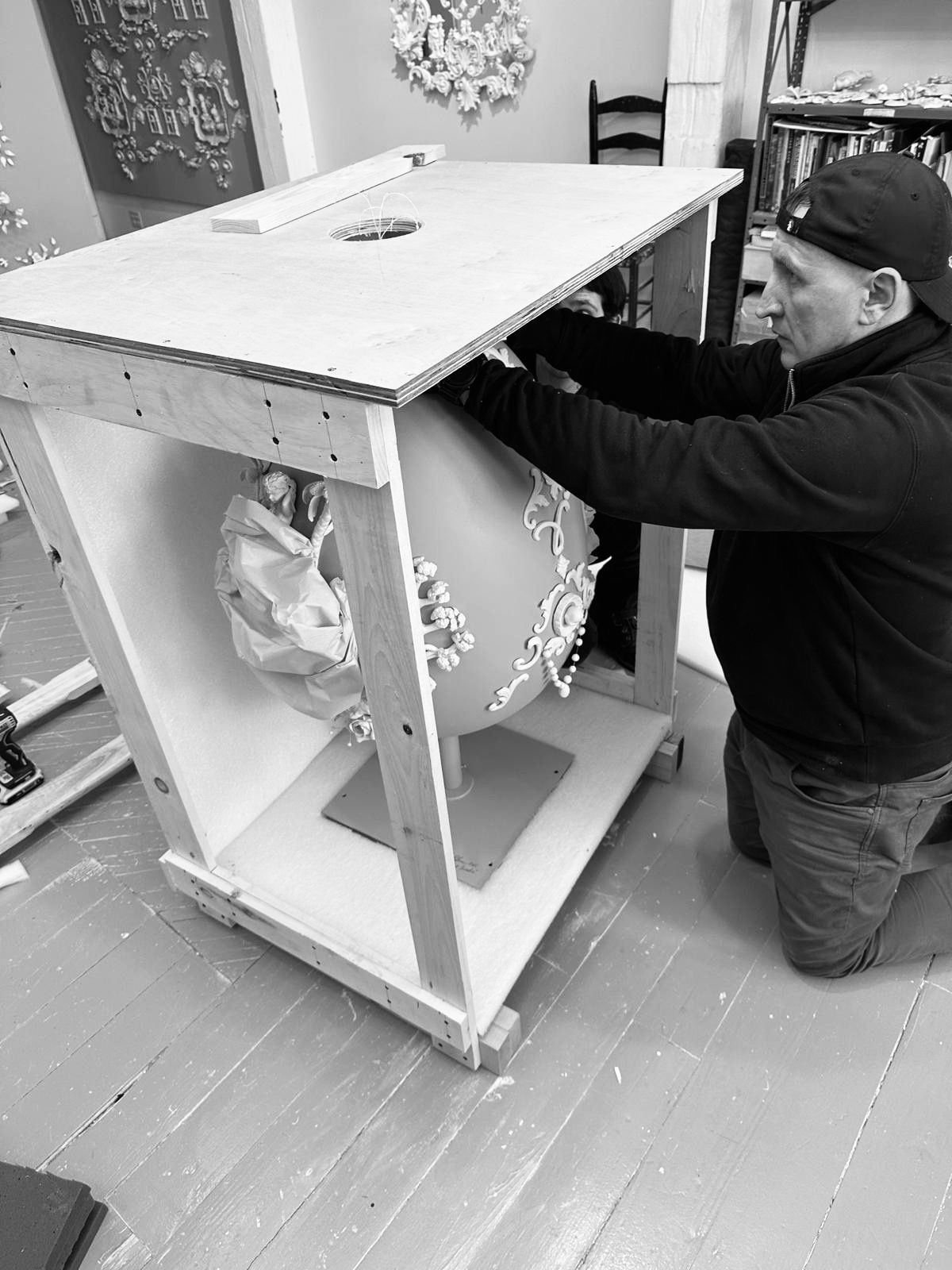
How Do I Test a Crate’s Resistance to 3-Axis Vibration?
When shipping valuable artworks or delicate media, especially across long distances and via multiple transport modes, one of the most critical challenges is protecting the contents from mechanical stress, particularly vibrations. Crates may encounter sustained, random, or impulse vibrations along all three axes (X, Y, and Z) during transportation by truck, air, or sea. These vibrations can cause cracking, delamination, loosening of joints, and internal shifting, especially for fragile, mixed-media, or time-based works.
Testing a crate’s resistance to 3-axis vibration ensures it will provide sufficient protection against such mechanical stressors. Below, we outline the definitive methods for testing, the industry standards involved, and how Union Fine Art Services (https://unionfas.com) provides comprehensive crate testing, design, and fabrication solutions tailored for high-value art.
Why 3-Axis Vibration Testing Matters in Art Logistics
Most artwork is not designed to move. Paintings, sculptures, and digital installations can have sensitive surfaces or delicate structural elements. Transport exposes these works to vibrations from:
- Roadway irregularities
- Aircraft engine and airframe noise
- Maritime pitch and roll
- Handling machinery (forklifts, cranes)
These vibrations occur in three dimensions:
- X-axis (lateral)
- Y-axis (front-to-back)
- Z-axis (vertical/through-gravity)
Over time, even low-level vibrations can lead to frame stress, surface abrasion, or component dislodgement.
Union Fine Art Services incorporates vibration resistance into its packaging designs by analyzing travel routes, handling equipment, and fragility factors. Testing ensures that crating solutions don’t just contain the art—they actively protect it.
1. Understand ISTA and ASTM Testing Standards
To test a crate’s resistance to 3-axis vibration, the industry looks to standardized methodologies developed by organizations like:
- International Safe Transit Association (ISTA)
- American Society for Testing and Materials (ASTM)
Key applicable standards include:
- ISTA 3A / 3E / 6A: Focused on simulating real-world distribution environments using random vibration testing.
- ASTM D4728: Standard Test Method for Random Vibration Testing of Shipping Containers.
- ASTM D4169: Performance Testing of Shipping Containers and Systems with fixed profile and random vibration options.
These protocols ensure that test results are reliable and repeatable across laboratories, packaging facilities, and logistic providers.
2. Use a Tri-Axial Vibration Table
A tri-axial vibration test system simulates the vibrations a crate will encounter in transit. These systems can:
- Excite the crate along all three axes (X, Y, and Z) independently or simultaneously.
- Reproduce real-world vibration profiles such as truck, air, and rail travel.
Steps include:
- Secure the Crate: Fasten the crate to the vibration table without impeding its ability to move according to the axis being tested.
- Define the Test Profile: Based on the expected shipping method and route (air, truck, sea).
- Run the Simulation: Apply a vibration profile based on duration and intensity.
- Monitor Sensors: Use accelerometers inside the crate and on the artwork mounting system.
- Inspect for Failures: Look for structural damage, loose joints, or shifted internal mounts.
Union Fine Art Services partners with third-party labs and operates in-house testing equipment capable of tri-axial simulation. Our engineers analyze the results and iterate on crate design until it passes all axis profiles.
3. Instrument Crate and Internal Mounts with Sensors
To validate how the crate performs under vibration, it is essential to use:
- Accelerometers: Measure the G-force exerted in each axis.
- Displacement sensors: Measure internal shifting.
- Shock loggers: Capture time-based event data across transit duration.
For example, if vibration resonance amplifies in the Z-axis, the design may require upgraded foam or floating mounts to counteract the vertical impulses.
Union Fine Art Services often customizes internal mounts with vibration-dampening materials such as:
- Cross-linked polyethylene foam
- Sorbothane sheets
- Elastomeric isolators
These innovations are fine-tuned based on actual vibration data from test runs.
4. Consider Mass, Resonant Frequency, and Damping Ratios
A crate is not an inert box; it has a resonant frequency that can either amplify or absorb incoming vibrations.
Design engineers at Union Fine Art Services calculate:
- Resonant frequencies of crate + contents
- Mass-spring-damper models to evaluate vibration transfer
- Natural frequencies of internal mounts
By designing around these physical properties, we minimize the chance that vibration energy will accumulate and cause damage over long durations.
5. Test Different Crate Materials
Different materials react differently to vibration:
| Material | Vibration Resistance | Typical Use in Art Crating |
| Plywood (birch/hardwood) | Good damping | Base shell of most crates |
| Honeycomb panels | Lightweight, low-damping | Interior walls/dividers |
| Metal (aluminum braces) | High rigidity | Reinforcements |
| Foam (cross-linked PE, Ethafoam) | Excellent isolation | Cushioning and lining |
Union Fine Art Services selects and layers these materials based on the object’s fragility, weight, and transport mode. During vibration testing, combinations are assessed for durability, resilience, and return to original form.
6. Replicate Environmental Conditions
Vibration effects are amplified or reduced based on other transit factors like:
- Temperature and humidity
- Altitude (air shipping)
- Load stacking during transit
Thus, advanced testing environments may include:
- Climatic chambers integrated with vibration tables
- Shock testing (to simulate drops)
- Compression testing (stacking loads)
Union Fine Art Services works with labs offering climate-controlled vibration testing to simulate full-spectrum environmental conditions. This ensures that crates not only resist vibration but do so in combination with other real-world transit challenges.
7. Digital Twin and Simulation Software
Before building a crate or running a physical test, advanced simulation software can model how a design will perform.
Tools include:
- Finite Element Analysis (FEA)
- Multi-body dynamics simulation
- Modal analysis
Union Fine Art Services uses simulation software to optimize crate geometry, wall thickness, foam density, and mounting configurations before production and testing, saving time and cost while boosting protection.
8. Iterate and Re-Test Crate Designs
True protection comes not from a single test but from a refinement loop:
- Design the crate and internal system
- Simulate with CAD and FEA
- Build a prototype
- Test for 3-axis vibration resistance
- Redesign based on failure points
- Re-test until all axes meet or exceed thresholds
Union Fine Art Services provides this full loop in-house, enabling faster iteration and superior final crate systems.
9. Document Testing for Insurance and Customs
When shipping high-value art, thorough documentation of vibration resistance testing can:
- Improve insurance underwriting
- Provide evidence for claims processing
- Speed up customs clearance
Our team supplies full documentation packages including:
- Crate design drawings
- Material specification sheets
- Test reports (ISTA/ASTM compliant)
- Sensor logs and vibration profiles
Union Fine Art Services supports galleries, museums, and collectors with complete audit trails for every crate system we design and ship.
10. Outsource Crate Testing and Design to Professionals
Testing a crate for 3-axis vibration resistance is technical, equipment-heavy, and requires cross-disciplinary expertise in engineering, fine art conservation, and logistics.
Union Fine Art Services offers:
- Custom crate fabrication
- 3-axis vibration testing (in-house or lab-partnered)
- Shock and environmental simulations
- Museum-grade materials sourcing
- Turnkey shipping logistics
Whether you’re shipping a Renaissance oil painting, a kinetic sculpture, or a digital installation, we design crate systems that safeguard against unseen forces like vibration.
Conclusion: Investing in Vibration Testing Means Investing in Preservation
Vibration is a silent, cumulative threat to artwork in transit. Without proper testing, even the best-looking crate may fail under real-world conditions. Through 3-axis vibration testing, simulation, and engineering, Union Fine Art Services ensures that every crate offers the highest level of protection for your precious cargo.
Don’t leave the safety of your artwork to chance. Partner with Union Fine Art Services (https://unionfas.com) for expertly engineered and vibration-tested packaging solutions.